Dental Implants Guide: Affordable, Must-Have Benefits & Procedure Explained
Dental implants have become a revolutionary option for those looking to replace missing teeth and restore their smile with a natural-looking, durable solution. Unlike traditional dentures or bridges, dental implants offer a permanent fix that supports oral health and improves quality of life. This comprehensive guide will walk you through everything you need to know about dental implants — including affordability, essential benefits, and a detailed explanation of the procedure.
What Are Dental Implants?
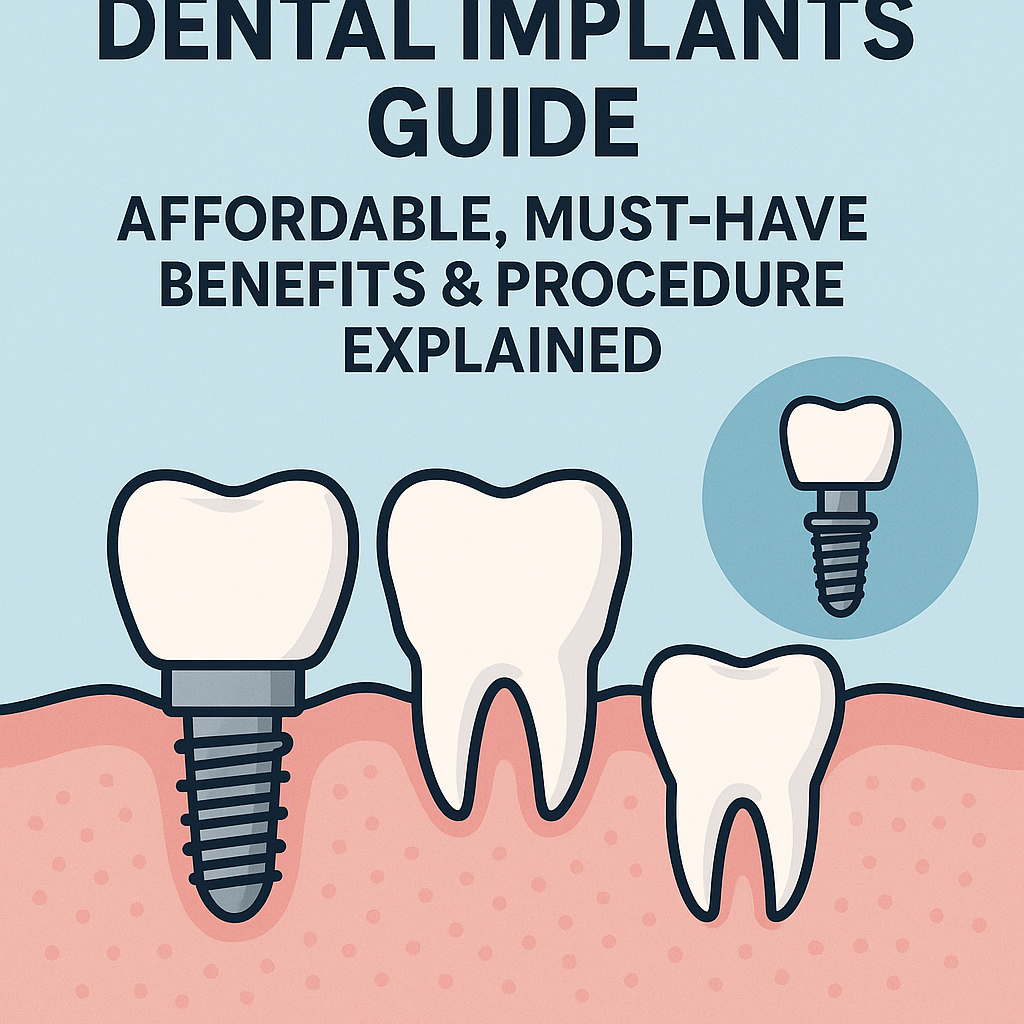
At their core, dental implants are titanium posts surgically inserted into the jawbone to act as artificial tooth roots. Once integrated securely with the bone, they provide a sturdy foundation for mounting replacement teeth such as crowns, bridges, or even full dentures. This integration not only ensures stability but also helps preserve bone density long after your natural tooth is lost.
Affordable Dental Implants: Is It Possible?
One common misconception is that dental implants are prohibitively expensive. While it’s true they can have a higher upfront cost than other tooth replacement methods, there are various ways to make dental implants more affordable.
Insurance and Financing Options
Some dental insurance plans now provide partial coverage for implants. Additionally, many dental offices offer payment plans or financing options that allow you to spread out the cost over several months or years, making it financially manageable.
Long-Term Cost-Effectiveness
Though initially pricier, dental implants can be more economical over time because of their durability. Unlike dentures that may need replacement or adjustment every few years, implants often last for decades with proper care. Reducing the need for frequent dental visits and replacements can save money in the long run.
Comparing Alternatives
Traditional solutions like bridges rely on adjacent teeth for support, potentially weakening them and leading to more dental work in the future. Dentures can cause discomfort and might require adhesives. Implants eliminate these concerns, offering a permanent and comfortable alternative worth the investment in many cases.
Must-Have Benefits of Dental Implants
Beyond affordability, dental implants bring numerous benefits that enhance both oral function and aesthetics.
Natural Appearance and Feel
One of the standout advantages is that implants look and feel like your natural teeth. The crowns attached to implants are custom-made to match your tooth color and shape, enabling seamless integration with your smile. Because implants anchor directly into your jawbone, they function like real teeth — enabling you to eat, speak, and laugh confidently.
Preservation of Jawbone and Facial Structure
When a tooth is lost, the jawbone can begin to deteriorate due to lack of stimulation. Dental implants act as artificial roots, stimulating the bone and preventing resorption. This helps maintain facial structure, preventing the sunken look that often accompanies tooth loss.
Improved Oral Health
Unlike bridges, which require grinding down neighboring teeth, implants do not affect surrounding teeth. This preserves your natural tooth structure and contributes to better long-term oral health. Additionally, implants are easier to clean and floss compared to bridges, minimizing the risk of decay and gum disease.
Enhanced Comfort and Stability
Because implants are fixed in place, you avoid the slipping or discomfort often experienced with removable dentures. There’s no need for adhesives and no worry about your teeth shifting while eating or speaking.
Dental Implants Procedure Explained
The dental implant process generally involves multiple stages spread over a few months. Understanding each step can help set realistic expectations.
1. Initial Consultation and Assessment
During your first visit, the dentist will conduct a comprehensive evaluation including X-rays or 3D scans to assess bone density and oral health. They will discuss your medical history, implant options, and develop a customized treatment plan.
2. Tooth Extraction (If Necessary)
If the damaged tooth is still present, it will need to be removed prior to implant placement. In some cases, the extraction and implant insertion occur on the same day.
3. Bone Grafting (Optional)
If you don’t have sufficient bone to support an implant, bone grafting may be necessary. This procedure adds bone material to strengthen the jaw and ensure successful implant integration. Healing time varies from a few weeks to months depending on the case.
4. Implant Placement Surgery
A titanium post is surgically inserted into the jawbone under local anesthesia. This minor procedure usually takes about one hour per implant. After surgery, a healing phase follows during which the implant fuses with the bone, a process called osseointegration, which can take 3-6 months.
5. Abutment Attachment
Once the implant has stabilized, an abutment — a connector piece — is attached to the implant. This will hold the artificial tooth firmly.
6. Placement of the Crown
Finally, a custom-made crown is fixed onto the abutment. It is designed to match your bite and appearance perfectly, restoring your smile.
Final Thoughts
Dental implants provide a remarkable option for those seeking a reliable, natural-looking tooth replacement that benefits oral health and confidence. While the initial cost can be an important consideration, the long-term advantages and investment in your well-being make them worthwhile. Understanding the procedure and the extensive benefits can help you take the first step toward achieving a strong, healthy smile that lasts a lifetime. If you’re considering dental implants, consult with a qualified dentist to explore your options and determine the best treatment plan tailored to your needs.